 EN
EN


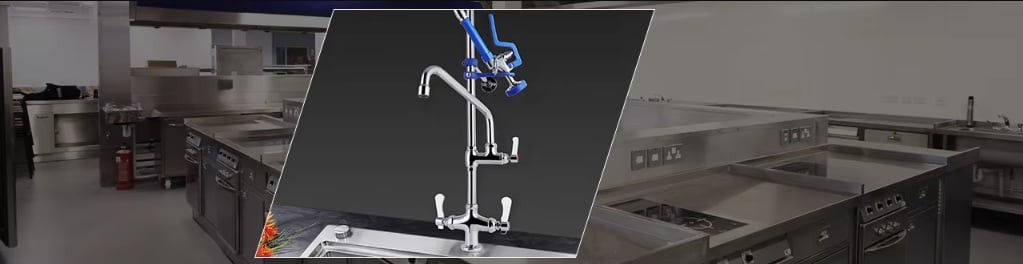
Why are wall mounted faucets popular in professional kitchens?
Space Efficiency That Changes Kitchen Layout
The most obvious advantage of wall-mounted faucets is also the most impactful: they free up sink deck space. In professional kitchens where every inch of counter space matters, eliminating the faucet base from the sink area creates room for other equipment, larger bowls, or simply easier access.
Deck-mounted faucets occupy a footprint on the sink rim. That footprint might only be a few inches, but in a crowded dish area, those inches affect how staff position racks, bus tubs, and sheet pans. Wall-mounted units sit behind the sink, completely clear of the work surface.
A restaurant design firm that specializes in high-density urban kitchens documented the space impact across 47 projects. Switching from deck-mounted to wall-mounted faucets freed an average of 34 square inches of usable sink deck space per station. In kitchens where every square foot costs thousands in annual rent, that space adds real value.
Easier Cleaning Around and Under the Faucet
Wall-mounted faucets are significantly easier to keep clean. With no base on the sink deck, there’s no crevice where food debris and moisture accumulate. The area under and around a deck-mounted faucet is notoriously difficult to clean thoroughly—food particles get trapped, moisture lingers, and over time, bacterial growth becomes a real concern.
Wall-mounted units eliminate this problem entirely. The sink deck is flat and uninterrupted. Staff can wipe down the entire surface in one motion. There’s no reaching around a faucet base, no scrubbing at the junction between the faucet and the sink.
One hotel kitchen with multiple banquet facilities tracked cleaning time for their pot sink area before and after converting to wall-mounted faucets. Daily cleaning time dropped from 12 minutes per sink to 4 minutes. The reduction came almost entirely from eliminating the detailed cleaning required around the deck-mounted faucet bases.
Clearance for Oversized Cookware
Professional kitchens wash a lot of large items. Stockpots that hold 20 gallons. Sheet pans that are 18 by 26 inches. Mixing bowls that require both hands to lift. Deck-mounted faucets, with their base on the sink rim, reduce the usable height and width of the sink bowl.
Wall-mounted faucets sit higher and further back. That extra clearance means oversized pots can be tilted and maneuvered without banging into the faucet. Staff don’t have to choose between washing a large item and keeping water flowing.
A commissary kitchen in Atlanta that produces meals for 15 schools documented the impact. Before switching to wall-mounted faucets, staff regularly had to wash large stockpots in a separate bay because the primary pot sink didn’t provide enough clearance. After the switch, all pot washing consolidated into one station. Workflow improved, and the kitchen reduced the number of sinks needed in the dish area.
Reduced Splash and Improved Ergonomics
The positioning of wall-mounted faucets affects more than just clearance—it affects how water enters the sink. Wall-mounted units typically deliver water from a higher elevation and often at a more vertical angle. This reduces splash compared to deck-mounted units where the spout is closer to the sink bottom.
Less splash means drier floors, safer footing, and less time spent mopping. In kitchens where floor mats already trap moisture and food debris, every reduction in splash makes a meaningful difference in safety and cleanliness.
The ergonomic benefits are less obvious but equally important. Staff don’t have to reach around or over a faucet base to access the sink. The working area feels more open. For dish station staff who spend hours at the same sink, that openness reduces the feeling of confinement and makes the station more comfortable to work at.
| Feature | Wall-Mounted | Deck-Mounted |
|---|---|---|
| Sink deck space | Fully clear | Partially occupied |
| Cleaning difficulty | Low | Moderate to high |
| Clearance for large pots | Maximum | Limited by base |
| Splash tendency | Lower | Higher |
| Installation complexity | Higher | Lower |
| Installation cost | Higher | Lower |
Installation Complexity Is the Trade-Off
Wall-mounted faucets aren’t perfect for every situation. They require rough-in plumbing behind the wall, which means installation is more complex and expensive than deck-mounted options. Retrofitting an existing kitchen with wall-mounted faucets often requires opening up walls and running new supply lines.
This trade-off matters. For new construction or major renovations, the added installation cost is easier to justify. For existing kitchens with limited budgets or tight timelines, deck-mounted faucets remain a practical choice.
A multi-unit restaurant group evaluated the cost-benefit of wall-mounted faucets across 12 new locations. The average additional installation cost per station was $420. Over a five-year operating period, the savings in cleaning time, reduced splash-related slip incidents, and improved workflow efficiency more than offset that initial investment.
Long-Term Durability in High-Traffic Environments
Wall-mounted faucets tend to last longer in high-traffic kitchens. There’s a simple reason: they’re mounted to the wall structure rather than the sink deck. Sinks get bumped, jostled, and loaded with heavy items. That movement transfers stress to deck-mounted faucets over time, loosening connections and causing leaks.
Wall-mounted units connect to fixed plumbing in the wall. The sink can shift slightly without affecting the faucet. That isolation from sink movement reduces wear on connections and extends the faucet’s service life.
A large hospital foodservice operation tracked faucet replacement frequency across their facilities. Wall-mounted units averaged 5.2 years between replacements. Deck-mounted units in comparable duty stations averaged 3.1 years. The difference came primarily from connection stress and the associated leaks that developed over time.
Wall-mounted faucets have earned their popularity in professional kitchens through practical advantages that translate directly to operational efficiency—more space, easier cleaning, better clearance, and improved durability. Manufacturers like Jmyouchu offer wall-mounted configurations engineered for the specific demands of high-volume foodservice environments.