 EN
EN



How to select the right commercial kitchen faucets for your food service operation?
Choosing equipment for your commercial kitchen is like assembling a complex puzzle. Every piece must fit perfectly to ensure seamless and efficient service. While major appliances like ovens and fryers often command the most attention, there is one humble yet critical workhorse that deserves equal consideration: the commercial kitchen faucet. A poor selection here can lead to operational downtime, significant water waste, and even safety hazards. Let's break down the essential factors to consider when choosing the right faucet for your specific needs.
Understanding Build Quality and Core Materials
First and foremost, consider what the faucet is made of. The commercial kitchen environment is demanding; fixtures endure constant exposure to water, harsh cleaning chemicals, physical impact, and high temperatures. Therefore, material choice is non-negotiable. The industry standard for commercial kitchen faucets is high-grade, lead-free stainless steel, specifically grades 304 or 316. This material offers superior corrosion resistance, is easy to clean, and stands up to rigorous daily use. Opting for cheaper alternatives may save money initially but often leads to higher long-term costs through frequent repairs and replacements. Manufacturers focused on durability, such as Youchu, utilize premium stainless steel paired with advanced casting techniques to ensure their fixtures last for years, not merely months.
Selecting the Optimal Operation Mechanism
How you control water flow is a decision impacting efficiency, hygiene, and conservation.
-
Manual Faucets: These are the traditional choice, featuring separate hot and cold handles or a single lever. They offer precise control but can be less hygienic if touched with soiled hands and may contribute to water waste if left running.
-
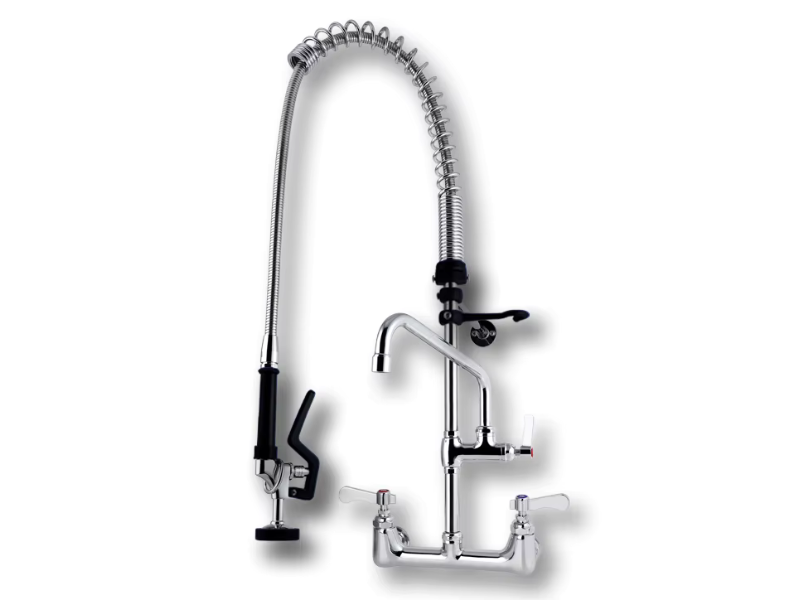
Pre-Rinse Faucets: Essential for any pot-washing station, these are powerhouse tools. They feature a high-pressure, pull-down spray head designed to blast food debris off dishes before they enter the dishwasher. This step is crucial for maintaining dishwasher efficiency and extending its lifespan. When selecting a pre-rinse faucet, look for models with various spray patterns, an ergonomic grip for comfort, and a durable, kink-resistant hose.
-
Sensor-Activated Faucets: These touchless, electronic faucets represent the pinnacle of hygiene and water conservation. They automatically activate when hands or objects are detected and shut off shortly after, eliminating cross-contamination risks and preventing water waste. They are ideal for high-traffic areas where hygiene is paramount, such as salad preparation stations.
-
Foot Pedal Faucets: These allow staff to control water flow with a foot pedal, keeping both hands free. This is an excellent solution for maintaining hygiene, particularly when handling raw proteins or when hands are covered in ingredients like dough or batter.
For operations prioritizing both cleaning power and hygiene, a luxury pre-rinse faucet designed for commercial use often combines robust spray performance with easy-to-clean, durable surfaces.
Considering Flow Rate and Water Efficiency
Water consumption represents both a significant utility cost and an environmental concern. Commercial faucets have defined flow rates, measured in gallons per minute (GPM). Local plumbing codes frequently mandate maximum flow rates for commercial pre-rinse spray valves, typically around 1.6 GPM. However, performance must be balanced with efficiency; a faucet with insufficient flow will slow down preparation and cleaning tasks. The goal is to identify a faucet that delivers effective pressure and cleaning power while adhering to water-saving standards. Leading manufacturers integrate water-saving and energy-saving technologies into their designs, ensuring operational efficiency does not come at the expense of unnecessary resource consumption.
Evaluating Feature Functionality and Design
The devil is in the details. Seek out features that enhance daily operations:
-
Spout Height and Reach: Ensure the spout is tall enough and has sufficient reach to accommodate your largest pots and pans sitting in the sink basin.
-
Swivel Functionality: A faucet with a 360-degree swivel or a wide arc provides flexibility, allowing use across multiple sink compartments with a single fixture.
-
Hose Length and Durability: For pre-rinse faucets, a long, heavily-braided stainless steel hose protected by an easy-clean sleeve is vital for extended reach and long-term durability.
-
Temperature Control and Safety: For manual faucets, precise thermostatic or pressure-balancing mixing valves can prevent scalding. Built-in safety mechanisms are essential for instant hot water dispensers.
-
Aerators: Standard faucets should be equipped with easy-to-clean aerators that mix air with water to maintain pressure while reducing splash.
Planning for Installation and Long-Term Maintenance
Consider installation requirements before purchasing. Does the new faucet match the existing hole configurations on your sink or countertop? Also, assess the under-sink space, as some commercial models—particularly those with electronic solenoids or large valves—require more room. Maintenance is equally critical. Choose a faucet with a readily available and replaceable cartridge system. A reliable supplier should offer accessible parts and clear documentation. A faucet might be excellent, but if you cannot source a replacement seal or cartridge in a timely manner, it becomes a costly inconvenience. This underscores the importance of selecting a brand with strong customer support and a global supply network.
The Importance of Brand Reputation and Certifications
Always research the manufacturer. In the world of commercial equipment, reputation is paramount. Seek out brands with a dedicated focus on the commercial and hospitality sectors. Look for relevant certifications like NSF/ANSI standards, which verify material safety and performance. Brands that invest in research and development—often incorporating precision engineering from leading regions like Germany and Italy—tend to produce more innovative and reliable products. A company that earns affirmation from a global customer base typically does so through consistent quality, thoughtful design that addresses real kitchen challenges, and a commitment to long-term partnerships.
Conclusion
Investing in the right commercial kitchen faucet enhances your operation's workflow, safety, and profitability. By carefully evaluating materials, operation type, efficiency, features, and the manufacturer's reputation, you can select a fixture that will integrate seamlessly into your kitchen's ecosystem for years to come. Remember, the right tools not only improve specific tasks but also elevate the overall performance and efficiency of your entire business.