 EN
EN



How to maintain and descale a heavy-duty commercial pre-rinse faucet?
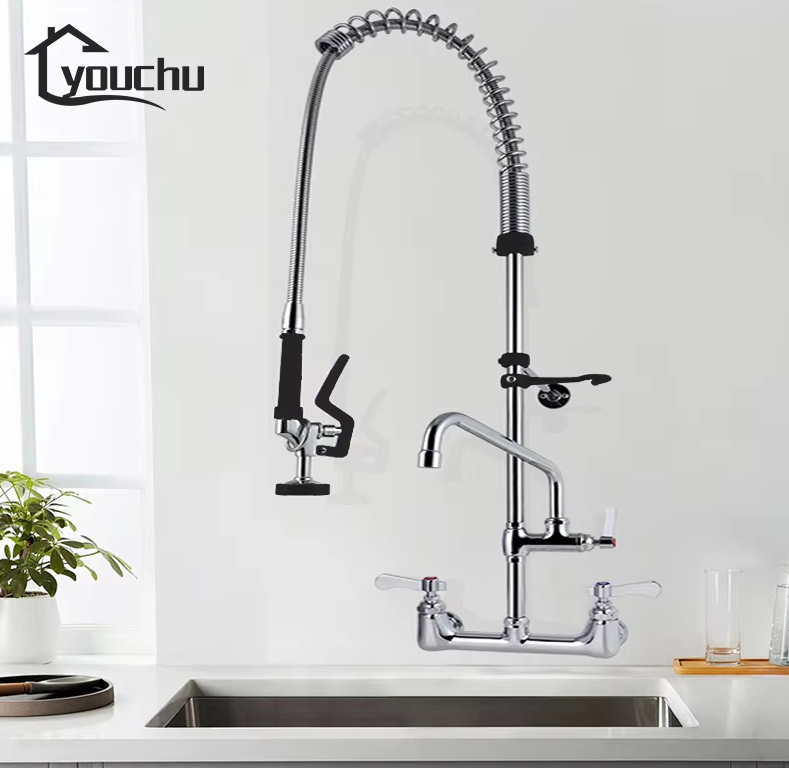
Your kitchen likely has a pre-rinse faucet. This type of faucet is considered the workhorse of commercial kitchens. It gets tugged, pulled, and yanked every day to blast food off of pots and pans before they head off to the dishwashing machine. Tough equipment gets to do its job, but the equipment needs some TLC too. Of course cleaning your pre-rinse faucet is an important part of the maintenance routine, but it is also important to keep the faucet performing like it's supposed to, avoid costly breakdowns, and to extend the life of the faucet. Fortunately, maintenance routines do not have to be complicated.
Why is faucet maintenance important?
Imagine your faucet is like a high-performance sports car; you wouldn't drive it for hundreds of thousands of miles without getting the oil changed, right? Well, faucets face a different type of danger; the faucet's biggest enemy is the hard water that runs through it and the different minerals that can build up and form limescale that can gunk up the head of the faucet and the valves. If the scale builds up enough it can turn a faucet from a powerful jet stream to a weak, scattered spray, and it can turn the handle stiff and make it drip. These headaches can easily be avoided through regular maintenance. Keeping the water pressure strong and the operation smooth saves water and makes your dishwashers' jobs easier. This is true for all types of commercial kitchens faucets, not just pre-rinse models.
Daily Small Clean Up Can Lead To Significant Improvement
You really don't need to go overboard and grab the power tools for a deep cleaning each time. A daily quick wipe down for each shift with a non abrasive damp cloth will go miles. Take a few seconds to wipe the faucet body, spring hose, and sprayer head. A quick rinse and wipe will also help prevent food from getting lodged in the nozzles of the sprayer head. Although a daily quick wipe requires no more than 2 minutes of time, the time and effort required to clean a build up of grime, grease, and food is exponentially more than the effort required to prevent it. The same goes for chrome units. The higher-end models from manufacturers like Youchu will maintain a polished, professional look and will also eliminate spotting issues.
Descaling Is Just as Easy as it Sounds
Even with the most diligent daily wipe-downs, sooner or later, scale from hard water will eventually accumulate inside. You know it's coming when spray patterns look uneven, or there's little to no spray at all. When the time arrives, don't worry, descaling is the solution, and it's surprisingly not that difficult to get done.
And especially not with the use of any extremely harsh chemicals. Plain ol' white vinegar is about to become your new best friend. It's cheap, effective, and food safe. Start by checking to see if the sprayer head is removable or not, many of them are designed to easily unscrew. If not, no problem. Take a plastic bag and fill it with undiluted white vinegar. Submerge just the sprayer head and secure the bag to the faucet with a rubber band or zip tie to ensure it stays submerged. Let it soak for a while. For light scale, you might only need to soak it for about an hour. For heavy accumulations, leave the bag attached overnight. After enough time the acid in the vinegar will have done all the work and dissolved the mineral deposits.
Once you have finished soaking, remove the bag and flush the sprayer head with water. If you removed the head, you can use a small brush, like a used toothbrush, to clean the nozzles and then rinse and reattach the head. Run the water for a minute to clean out the hose or faucet body. Flush out any debris and you should be able to feel improved water pressure and spray pattern.
Faucets, Washers, and Springs
If you are in maintenance mode for the sprayer, take a few moments to check the rest of the faucet. Pay particular attention to the hose where it connects to the sprayer head and the faucet body. Look for any kinks, bulges or signs of wear. Reinforced stainless steel hose used in durable commercial models lasts a long time, but it is still good to keep an eye on it.
Pay attention to drips when the faucet is turned off. Internal washers and seals that are worn out are the causes of slow drips. To prevent issues from escalating, it is important to fix drips as soon as possible. Most faucets are designed to take cartridges and washers that are easy to obtain. Also, take a look at the spring. On better models, the spring is made from quality stainless steel, but over time it can lose a lot of tension from repetitive bending. Identifying these problems early means you can spend a few dollars to replace a part rather than having to replace an entire faucet later.
The Proper Cleaning Method for Exteriors
To maintain the appearance of the faucet and make cleaning easier in the future, the surface should be protected from dirt build-up. Daily cleaning requires only soapy water and a gentle cleaning cloth. Abrasive scrubbing pads and acidic cleaners should be avoided as they will create scratches and will cause damage to the finish, particularly chrome and PVD coatings. While the coating is durable, aggressive scrubbing will cause the coating to deteriorate and become more susceptible to tarnishing and corrosion. If you want to avoid extensive cleaning, all that is really required is a gentle wipe-down.
Keeping It Running Smooth for the Long Haul
Making sure your kitchen runs smoothly means investing in heavy duty commercial pre-rinse faucets. It's easy to protect your investment with a simple, daily quick wipe of the equipment, and occasionally soaking the head in vinegar. Just be vigilant with the hoses and washers. These habits help prevent frustrating problems such as low pressure, drips, and uneven spray. They keep your faucet working as it should, day after day. It even helps to ease the heavy workload for your entire team. When your equipment lasts longer and works better, the whole kitchen runs smooth and easy.