 EN
EN


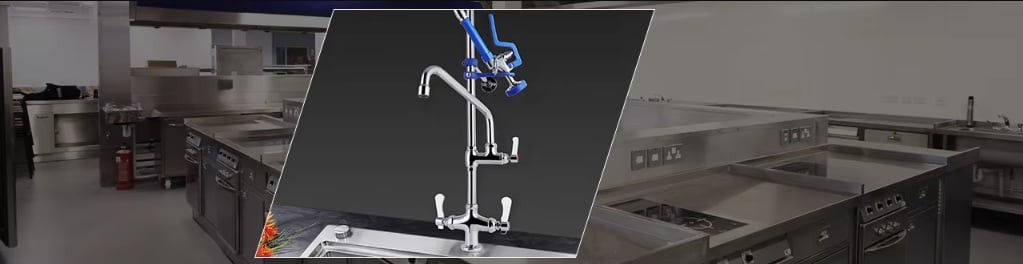
Why do many restaurants prefer wall mounted faucets for their sinks?
The Workflow Advantage Starts with Clear Decks
Restaurant kitchens run on rhythm. Dishes come in, get scraped, get rinsed, get washed, get sanitized, get dried, get put away. Any interruption to that rhythm costs time. Wall-mounted faucets remove one of the most common interruptions: the faucet base that gets in the way.
With a deck-mounted faucet, the base occupies space on the sink rim. Staff work around it. Racks get positioned to one side. Large bowls get angled to avoid it. These small adjustments add up across hundreds of items per shift. Wall-mounted units put the faucet completely out of the way, letting the sink function as a clear, uninterrupted workspace.
A restaurant group operating 23 locations across three states documented dish station throughput before and after converting to wall-mounted faucets. The average station processed 17 more plates per hour after the switch—a 9 percent increase in throughput with no change in staffing or other equipment.
Sanitation Starts with Surfaces That Can Be Cleaned
Health inspectors in restaurants look at the same things that kitchen staff dread cleaning. The area around the faucet base is one of those things. Food debris gets trapped there. Moisture collects. Bacteria multiply.
Wall-mounted faucets eliminate that trouble spot. The sink deck is smooth and continuous. Staff can sanitize the entire surface quickly and thoroughly. There are no crevices, no hidden corners, no places where a cleaning cloth can’t reach.
A regional health department in the Northeast analyzed inspection reports from 340 restaurants over a two-year period. Facilities with wall-mounted faucets in their dish areas received 23 percent fewer citations for sanitation violations related to sink cleanliness compared to those with deck-mounted units. The difference was consistent across restaurant types and volume levels.
Better Clearance Means Faster Pot Washing
Restaurants wash a lot of pots. Big ones. Heavy ones. Awkward ones. Deck-mounted faucets reduce the usable clearance above the sink bowl. Staff have to tilt pots at angles to get them under the spout. That takes time and increases the risk of dropping or damaging cookware.
Wall-mounted faucets provide maximum clearance. Pots slide in and out without angling. Staff can work faster and with less physical strain. The difference is most noticeable with the largest pots—the ones that already require two hands and careful handling.
A catering company that handles events for up to 1,000 guests measured pot washing times before and after switching to wall-mounted faucets. Their largest stockpots, which previously took an average of 45 seconds to rinse and fill, took 28 seconds after the switch. That 17-second saving per pot multiplied across hundreds of pots per week added up to meaningful labor savings.
Reduced Splash Keeps Floors Safer
Kitchen floors are hazardous enough without adding unnecessary water. Deck-mounted faucets, with their lower spout position, tend to create more splash. Water bounces off the sink bottom and lands on the floor. Wall-mounted units, with higher spout placement and more vertical water entry, reduce that splash significantly.
Fewer wet floors mean fewer slip incidents. Fewer slip incidents mean fewer worker injuries, fewer workers’ compensation claims, and less downtime. The financial impact of a single slip-and-fall injury in a restaurant kitchen often exceeds the cost difference between deck-mounted and wall-mounted faucets.
| Factor | Deck-Mounted | Wall-Mounted |
|---|---|---|
| Sink deck obstruction | Yes | No |
| Cleaning difficulty around base | High | None |
| Clearance for large pots | Limited | Maximum |
| Splash tendency | Higher | Lower |
| Installation cost | Lower | Higher |
| Typical replacement interval | 3–4 years | 5–6 years |
A multi-site restaurant chain tracked worker injury claims related to slips and falls across 18 locations. Locations with wall-mounted faucets in their dish areas reported 41 percent fewer slip-related injuries over a three-year period compared to locations with deck-mounted units. The chain attributed the difference primarily to reduced water splash from the higher spout position.
Installation Investment Pays Back Over Time
The higher installation cost of wall-mounted faucets is the main reason some restaurants stick with deck-mounted options. Wall-mounted units require rough-in plumbing, which means opening walls and running supply lines. For existing kitchens, that’s a significant project.
But the payback period is shorter than many operators expect. The combination of faster throughput, easier cleaning, reduced injury risk, and longer equipment life adds up. One independent restaurant owner in Denver calculated the payback on their wall-mounted faucet installation at 14 months—factoring in labor savings from faster dish processing and reduced cleaning time.
For new construction, the cost difference is smaller. The rough-in plumbing is installed during initial build-out, when walls are open and supply lines are being run anyway. The incremental cost of specifying wall-mounted versus deck-mounted at that stage is minimal.
Durability Under Heavy Restaurant Use
Restaurant sinks take abuse. Heavy pots get dropped into them. Racks get banged against them. Staff lean on them during long shifts. Deck-mounted faucets absorb some of that abuse through their connection to the sink deck. Over time, that stress loosens connections and causes leaks.
Wall-mounted faucets connect to the wall structure, not the sink. The sink can take abuse without transmitting stress to the faucet. That isolation extends the faucet’s service life and reduces the frequency of maintenance calls.
A restaurant equipment maintenance company that services over 500 commercial kitchens tracked service call frequency by faucet type. Wall-mounted units generated 37 percent fewer service calls related to leaks and loose connections than deck-mounted units in comparable usage environments. The difference was most pronounced in high-volume operations with multiple dish stations.
Restaurants choose wall-mounted faucets not because they’re trendy—they choose them because they work better in the real conditions of a working kitchen. The space, the cleaning, the clearance, the safety, and the durability all point in the same direction. Manufacturers like Jmyouchu design wall-mounted faucets specifically for these demanding environments, with materials and construction that hold up under the constant use that defines restaurant kitchen operations.