 EN
EN


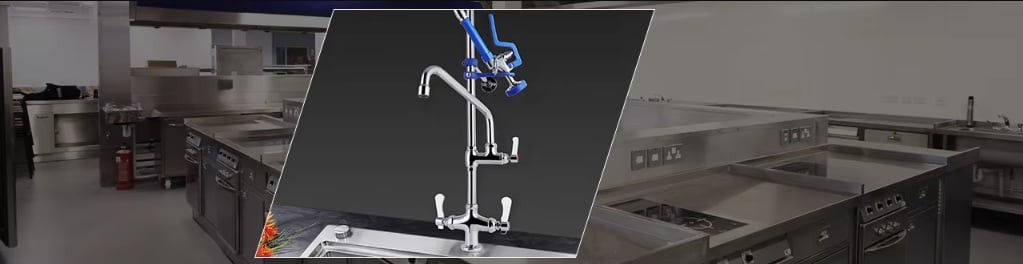
What are the advantages of a commercial kitchen faucet over residential models?
Commercial Kitchen Faucet vs. Residential Models
If you're outfitting a new restaurant, cafe, catering hall, or any busy food service environment, you may think that that sturdy-looking faucet from a home improvement store can easily get the job done. After all, it's handling all the duties of your home kitchen. However, the workload and requirements of a commercial kitchen are much more demanding. Selecting a faucet in a residential style compared to a commercial kitchen faucet is more than just a style preference, it's not a fit for the tool's purpose to exceed all expectations under a relentless, demanding workload. Selecting a residential model in a commercial environment is a popular shortcut that will almost always result in operational headaches and more costs. There are a lot of advantages that come with a true commercial faucet. These advantages are foundational, affecting the daily operation and safety of the faucet. Other than that, they will affect your daily bottom line.
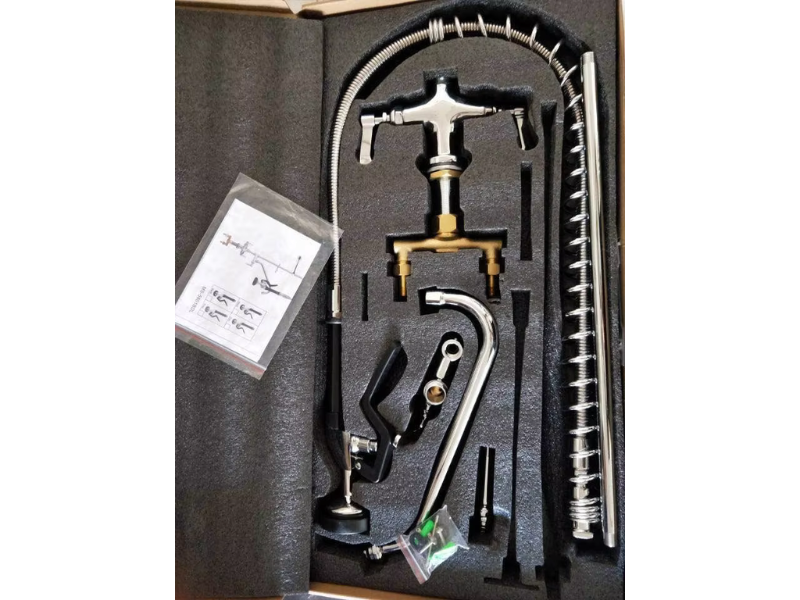
Engineered for Endurance: Unrivaled Durability and Construction
This is owed to the sheer physical construction and material integrity. An average household tap is made to last for 20-30 uses a day. This use is a gentle turn and water is turned under soft pressure. In contrast to the household version, a commercial tap must endure impact of heavy pots and pans, water under pressure, high use cycles, and corrosive industrial-strength cleaning chemicals. Where household docking systems are made of decorative thin-walled brass and thin plastic, a commercial tap is made of heavy-duty materials.
Think about the major components.
When it comes to commercial faucets, grade SUS304 stainless steel tubing is the thickest, and is the highest quality stainless steel available, as it is virtually rustproof and impact resistant. As a food safety best practice, some commercial faucets even have a solid copper core, as copper is also more durable and naturally anti-microbial. When it comes to the cartridges, ceramic disc and heavy-duty brass are smooth, leakproof, and designed to withstand a lifetime of constant use, so they are always a good choice. Every part. Every finish. Every joint is designed with a long, brutal life in mind. This even results in a vastly longer commercial faucet life-span than a residential one. A residential faucet will buckle and even break under commercial use pressure in a matter of months, while a commercial-grade faucet is designed to last years, saving the customer a costly, repeated replacement.
Purpose driven: Professional use and work flow in the kitchen
Instead of just being functional, commercial faucets are built to improve the speed and flow of work being done in the kitchen. Their features aren't tailored to home use. The most recognizable function is the pre-rinse and is often either missing or is underpowered in home models. A commercial pre-rinse system has a long, kink-resistant stainless steel hose and a spray nozzle that is capable of shooting out a strong, concentrated stream of water. Employees are able to quickly blast food debris off of dirty dishes before they are washed in the dishwasher, rinse out large stock pots, and clean the sink. This function alone. Dramatically increased the speed in which sinks could be cleaned in fast-paced kitchens.
In addition, the design also focuses heavily on practicality. A wall-mounted, commercial faucet also opens up the whole sink deck, leaving the space below the sink open for placing dishes, using scrubbers, or storing sink cleaning supplies. Commercial sink faucets are designed with handles that can easily be turned on or off using a hand that is wet, greasy, or gloved off with, and also have textured grips for positive control. Their commercial design also aims to control how hot or how much water flows out, providing professional-level hot water available for immediate use to clean and therefore sanitize a sink, or to maintain control over the water for varying amounts or to some lesser extent for other specialized cleaning tasks, faucet designed to keep a sink flowing, safely and efficiently to help maintain the kitchen at a high functioning level, and also keep the kitchen operating at high levels of productivity.
A Foundation for Safety and Compliance
Operationally and legally, safety and hygiene in a commercial kitchen are a big deal. Commercial faucets have safety and hygiene built into them. Hygiene starts with the faucet's materials. Premium stainless steel and many other commercial grade finishes have a long wearing, smooth, non-porous surface that does not harbor bacteria or mold, making the faucet easy to clean, plus it's mold and bacteria resistant. As mentioned, the internal use of copper further inhibits the growth of germs and bacteria in the waterway.
Also, commercial fixtures like faucets are regularly specially certified for strict public health and safety standard compliance, including NSF/ANSI certifications, which control safety and performance of materials and design for food service equipment. These certifications guarantee faucets are lead free and are made of materials that won’t contaminate the water or leach dangerous substances. Additionally, using a non-certified residential faucet could fail health inspections and create a real threat of contaminating food prep areas. A commercial faucet is more than just a faucet; it is a working component of a kitchen’s food safety system and meets the standards required for professional settings.
Value Over Time vs Total Ownership Cost
When it comes to commercial kitchen faucets, it's true that they can cost more than the kitchen faucets used in homes. However, that becomes worth it in the long run. From a long-term perspective, the residential option becomes more expensive. A residential faucet can incur significant costs when it has to be replaced in a commercial kitchen, including the cost of the faucet replacement, the expensive emergency plumbing repairs, and the major operational costs of a closed kitchen, which loses money for every second it is closed.
Understanding that a commercial faucet is built to last helps avoid the situations mentioned above, and helps avoid expensive repairs. Commercial faucets have a reputation for their reliability, and their construction helps them to avoid significant breakdowns. If a breakdown occurs, it often won't be a long repair. That's because commercial faucets have construction that allows for cartridge and seal replacements to be quick and easy, without needing to remove the entire faucet fixture. Even under more wear and tear than residential models, commercial faucets have a much longer life span. More repairs will be avoided when collected downtime is sustained, and when the faucet always works. This makes the purchase of a commercial faucet a more economical choice, and the choice that shows professionalism for it's food service operation.